

Skip to content

logo64-Perfion-RGB-color-onWhite 3


Perfion integration
for SAP Business One

Integrate Perfion PIM with SAP Business One to centralize, enrich and distribute product data across all channels, managing complex product information efficiently.


 

The solution to the challenges of managing product data in SAP Business One


Prepare for growth

Many companies running SAP Business One rely on the ERP system to store product information. While this may work initially, it often becomes difficult to manage as product portfolios grow and product data becomes more complex. Product specifications, marketing descriptions, images, translations and classifications are rarely created in ERP systems. 

Enhancements with Perfion

Perfion with SAP Business One provides a more structured way to manage product information. Perfion becomes the environment where product data is organized, enriched, and validated, while SAP Business One continues to handle operational processes such as sales, purchasing, manufacturing, and inventory.

Benefits of integrating Perfion with SAP Business One

ERP systems are designed to support operational processes. But they are not built to manage the full lifecycle of product information. Product data often evolves long before an item is ready to be sold or manufactured. Marketing teams may be preparing descriptions and images, engineers may still be defining specifications, and product managers may be working on variants or configurations.

By integrating Perfion with SAP Business One, companies gain a dedicated environment for managing product information while ERP continues to focus on operations.

Lady with glasses smiling

Check out our fact sheet to learn more about how the Supplier Portal can help your business.


Read fact sheet

Perfion_illustartion_e-book

Improved product data quality

Product information can be structured, validated, and enriched in one place outside of the operational systems.

Better collaboration between teams

Product management, marketing, engineering, and sales teams can work on product information without affecting ERP operations.

Reduced manual work


Product data only needs to be maintained once and can then be distributed across ERP systems, websites, eCommerce solutions, catalogs and other channels.

Scalability for complex products 


Perfion is designed to manage complex product structures, variants, digital assets and multilingual content.

Download our Perfion & SAP Business One
integration fact sheet



shutterstock_2610000249

The ERP-First Approach


Improved product data quality

Many organizations prefer to keep SAP Business One as the starting point for product records. In this model, items are created in the ERP system first and then synchronized with Perfion.

The ERP Add-in for SAP Business One enables Perfion to connect directly with the ERP environment. Once items exist in SAP Business One, their product information can be extended and enriched in Perfion.

How it works:

SAP Business One remains responsible for item creation and operational data

Product information can then be distributed to websites, catalogs, eCommerce solutions, and other sales channels

Perfion manages additional product attributes, descriptions, images, and digital assets

This model works well for organizations where product records are tightly controlled within ERP processes but where teams still need a better way to manage marketing content, product specifications, and channel-specific information.

Perfion complements SAP Business One by making product information easier to manage and distribute without changing the existing ERP processes.

The PIM-First Approach


Controlling when product information enters ERP

In many companies, product information is created long before items are ready to be operational in ERP. Engineering teams may still be defining specifications, marketing may be preparing product descriptions, and digital assets may still be under development. 

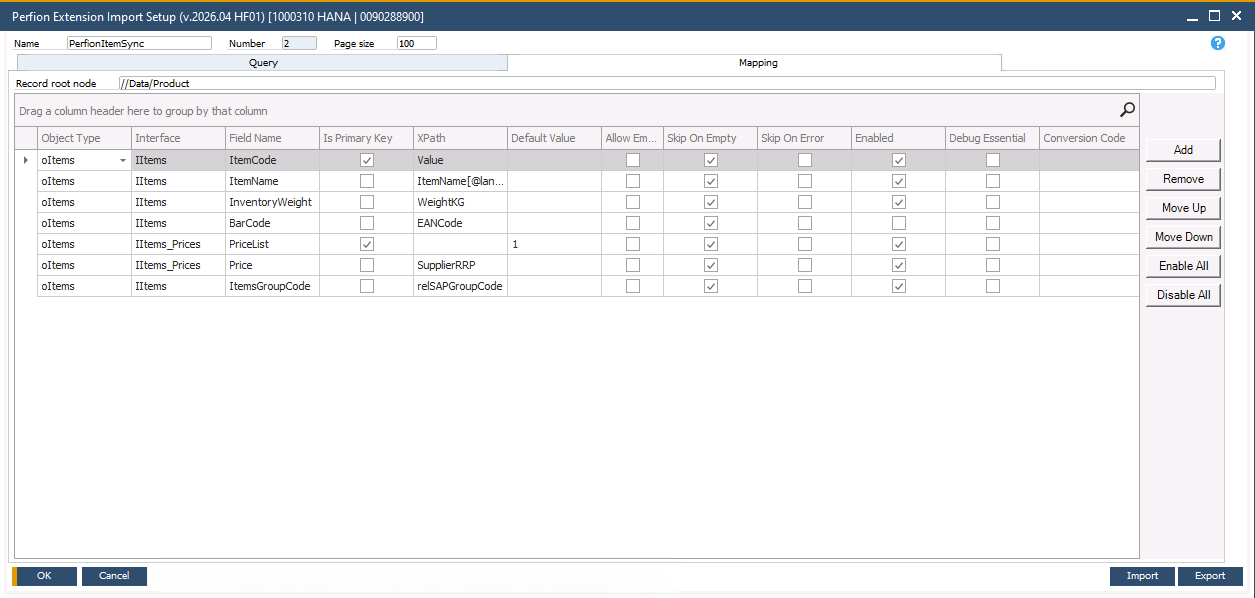
The Release2ERP integration for SAP Business One supports a different workflow where product information is created and managed in Perfion before it becomes an ERP item.

shutterstock_2164655469

How it works:

Product data is created and enriched in Perfion

Data completeness and validation rules ensure that all required information is available

Once the product is ready, the information is released to SAP Business One, where the ERP item can be created or updated automatically

This approach allows organizations to manage the full lifecycle of product information before it becomes operational in ERP.

It also ensures that SAP Business One only contains production-ready product records, while Perfion manages the broader product information, including technical specifications, marketing content, digital assets, classifications, and channel-specific data

Supporting the Product Value Chain

The integration between Perfion and SAP Business One plays an important role
in connecting product information management with operational ERP processes
across the product value chain.  


Handling long-tail product assortments

Another advantage of the Release2ERP approach is the ability to manage large or long-tail assortments without creating unnecessary item records in SAP Business One.

Many companies want to make a broader range of products available to customers than what they actively maintain in ERP. These may include rarely ordered spare parts, highly specialized products, configurable items, or extended assortments used mainly for eCommerce.

With Release2ERP, these products can be managed entirely in Perfion and made available across sales channels such as websites, eCommerce solutions, and digital catalogs. Customers can see and purchase these products even though they do not yet exist as items in SAP Business One.

Only when a product is actually sold does the item need to be created in ERP. At that point, the product information managed in Perfion can be released to SAP Business One and the corresponding item number can be generated automatically.


PerfionImportSetUp_Screenshot_SAPB1Integration_1

This allows companies to:

 Offer broader product assortment online

Avoid maintaining thousands of rarely used items in ERP

Create ERP item numbers only when they are operationally required

For businesses with large product catalogs or specialized products, this approach provides flexibility while keeping the ERP environment clean and manageable.

FAQ

What is the Perfion integration for SAP Business One?

The Perfion integration for SAP Business One is a solution that connects your ERP system with a dedicated Product Information Management (PIM) platform.

  • SAP Business One manages transactional data (orders, inventory, finance).

  • Perfion PIM manages product data (descriptions, specifications, images, translations)

This separation ensures that product information is accurate, scalable, and ready for use across eCommerce, catalogs and sales channels.

Can Perfion replace SAP Business One?

No. Perfion complements SAP Business One by managing product information, while SAP B1 handles transactional processes.

Is Perfion suitable for complext product data?

Yes. Perfion is designed to handle variants, multilingual content, and digital assets.

Does this integration support eCommerce?

Yes. Product data from Perfion can be distributed to eCommerce platforms, websites, and catalogs.

More exciting PIM content to explore

shutterstock_2599803585
Brochure

Explore how you can get more out of Perfion PIM with the Content Store

Customer_Success_Thumbnail-1
Success stories

See how Perfion PIM drives growth across different industries

shutterstock_1619579806
See our solutions

Compare our offers and pick the right choice for your business needs